Monday, 7 June 2010


38 years after Bloody Sunday, soldiers face growing fear of murder charges

By JASON LEWIS, MAIL ON SUNDAY SECURITY EDITOR
Last updated at 12:31 AM on 6th June 2010
    Soldiers and officers involved in Bloody Sunday could face prosecution and even murder charges over the events of nearly 40 years ago following the long-awaited verdict of the official inquiry. 
The investigation, launched by then Prime Minister Tony Blair, is due to release its final report after 11 years of hearings and lengthy delays that cost the taxpayer more than £200 million. 
Yesterday, sources in Northern Ireland claimed inquiry chairman Lord Saville’s conclusions would be ‘very bad’ for the Army and lead to files on the actions of soldiers and their officers being referred to the Director of Public Prosecutions. 
Lord Saville
Final report: Lord Saville was asked to lead the inquiry by Tony Blair
Lord Saville has been examining what happen in Londonderry on January 30, 1972 when 14 civilians were shot dead by paratroopers during a banned civil rights march – amid claims that IRA snipers had attacked the troops. 
Mr Blair set up the investigation in January 1998 and it heard its first oral evidence in November 2000, with soldiers allowed to give testimony anonymously because of fears for their safety. 
Its 5,000-page report will be published on June 15. In what became known to Republicans as the Bogside Massacre, 27 protesters were shot by members of the Parachute Regiment, with 13 men, including seven teenagers, killed and another man dying from his wounds four-and-a-half months later. 
Two protesters were injured when they were run down by Army vehicles and many witnesses, including journalists, testified that all those shot were unarmed. Five of the wounded were shot in the back. 
The Northern Ireland sources suggest the inquiry will conclude that some of the killings were unlawful, leading to a legal debate over whether charges can be brought so long after the events. 
An unlawful killing verdict has seemed the most likely outcome after several unlikely witnesses suggested that innocent people had been killed. 
In May 2007, former Army chief General Sir Mike Jackson, who served as a Captain in the 1st Battalion the Parachute Regiment in Londonderry on the day of the shootings, said he had come to the conclusion that soldiers shot dead innocent people on Bloody Sunday. 
Sir Mike, who also served as the Regiment’s adjutant at the time, did not take part in the shootings but took statements from soldiers who did. 
He told the inquiry: ‘Far from being an attempt to rewrite history, the direction [soldiers’ statements] I received was clearly an attempt to record what had happened. Further, I had been present and had a grasp of events overall. 

'I am sure it would have been clear to me if anyone was not telling the truth.'

'I am sure it would have been clear to me if anyone was not telling me the truth.’ 
Previously Sir Mike had insisted that those shot dead had been involved in IRA activity during the civil rights march. 
The late RUC Chief Superintendent Frank Lagan, who was in charge of policing in the city at the time, said in evidence that he met the then commander of British land forces, General Robert Ford, and the Army’s most senior officer in Londonderry, Brigadier Pat MacLellan, on Bloody Sunday. 
Ch Supt Lagan, who died in 2005, claimed General Ford ‘turned his back’ on him when he attempted to tell him that he had received a message that the marchers would not attempt to confront soldiers. 
And former Army Colonel Tim Collins claimed that a rifle used by soldiers on Bloody Sunday was found during an SAS operation in Sierra Leone. The rifle had been declared ‘destroyed’ by the Ministry of Defence along with 13 of the 29 rifles fired by paratroopers on Bloody Sunday. 
Bloody Sunday
Face off: Soldiers and demonstrators in Londonderry on January 30, 1972, when 14 civilians were shot dead
The Counsel to the Inquiry, Christopher Clarke QC, said it was not known which soldiers had carried out the majority of the fatal shootings. 
He also criticised the Army’s planning in the days before the march, saying it was left to more junior officers by General Ford. Lawyers representing some of the families of those killed have said the evidence to the inquiry suggests some of those involved must be prosecuted. 
Greg McCartney, a solicitor who represents the relatives of victim James Wray, warned that if Lord Saville did not make a finding of unlawful killing, or murder, then the inquiry would be rejected as a whitewash. 
That was the fate of a tribunal conducted immediately after Bloody Sunday by Lord Widgery. 
Last night a Northern Ireland office spokesman said new Secretary of State Owen Paterson had not yet received the final report.
 

How 'BT Sarah' spies on your Facebook account: secret new software allows BT and other firms to trawl internet looking for disgruntled customers

By JASON LEWIS
Last updated at 7:05 PM on 6th June 2010
bt
Lilly Allen: BT was forced to act swiftly after she posted comments online complaining about their service
Some of Britain’s biggest firms were last night accused of ‘spying’ on their customers after they admitted ‘listening in’ on disgruntled conversations on the internet.
The companies include BT, which uses specially developed software to scan for negative comments about it on websites including Twitter, Facebook and YouTube.
Budget airline easyJet, mobile-phone retailer Carphone Warehouse and banks including Lloyds TSB are also monitoring social networking sites to see what is being said about them.
The firms claim there is nothing sinister about the practice, with BT insisting it is merely acting as ‘a fly on the wall’ to ‘listen and engage with our customers’.
But privacy campaigners have accused them of ‘outright spying’ while legal experts have suggested that firms making unsolicited approaches to customers could fall foul of data protection laws.
There are also fears the technique could be used to inundate customers with sales pitches and advertising,  or be used by political parties.
Research published last year found that a negative review or comment by a frustrated customer on the internet can lose companies as many as 30 other customers.
A negative comment from a celebrity can be even more damaging. Earlier this year, BT was forced to act quickly after singer Lily Allen wrote on her Twitter page: 
‘Anyone know who the CEO of BT is? I’d find out myself but my internet connection is so bad I can’t even Google. Such bad service, awful.’
BT is using software called Debatescape, which trawls social networking sites for keywords to identify anyone making negative comments about the company. Angry customers are then contacted by email suggesting ways BT can help to solve the problem.
The move comes as many of BT’s customers turn to the web to air their complaints because of the difficulties in getting through to its call centres. 
Ironically, many of the comments on BT’s own Twitter page are written by those complaining they are not able to reach service staff.
Managers overseeing BT’s social networking operation claim ‘most of the feedback we get is positive – customers like it when we pick up on their BT-related issues without them asking directly’.
twitter
Lily Allen's angry Twitter post
However, one disgruntled customer said he was stunned to be approached by the firm after he posted angry comments on his personal Facebook page.
The BT business customer, who has asked not be named, wrote that he thought ‘BT are just a bunch of unaccountable, business shafting, useless b*******’.
Within hours he had been contacted by someone calling themselves ‘BT Sarah’, saying: ‘I saw your post about having problems with your BT services. Is there anything I can do to help?’
The customer, who runs an online business, said: ‘I did not expect what I was saying to my friends to be seen. I have since changed my privacy settings so only my friends can access my page. What happened was quite Big Brotherish and sinister.’
It comes just two years after BT was involved in another internet privacy storm over its installation of software called Phorm, which delivers targeted advertising to internet customers. The Information Commissioner’s Office and the European Commission both voiced legal concerns about the system.
But Warren Buckley, BT’s managing director of customer services, defended the practice, saying the system has been used to help around 30,000 people.
‘The key is we are only looking at what people are talking about in public spaces,’ he said. ‘We are not picking up anything private. These are all discussions that can be seen by anyone on the web.
BT
Listening in: Some angry BT customers, unable to get through to its call centres, are turning to the internet to post disgruntled messages
‘I would liken it to someone having a conversation in a pub – it’s just a very big pub. We can’t stop people saying negative things about us. What we can do is identify them and offer to address those concerns.
‘Many people we contact in this way are wowed by it. And for us it is another way to listen to what our customers are saying and to reach out to them.’
A spokesman for easyJet, which uses the internet for 97 per cent of its ticket sales, said using Twitter and Facebook was a natural extension of its online presence.
‘The initial reaction of some is that it is a bit like Big Brother watching them,’ he added. ‘They can be quite upset. But when they realise we are trying to help they are quite surprised and positive.’
A spokesman for Carphone Warehouse said: ‘We can often use this to turn a negative situation into a positive one. People complaining on the internet do it in an instant.
‘They are frustrated and use it to vent that anger. When we identify them we can often offer a solution. People we speak to are often blown away that Carphone Warehouse is listening and are overwhelmingly positive about it.’
There are continuing concerns over the level of protection given to people’s information on Facebook.
The firm came under fire last year after it introduced changes to its default privacy settings which allowed people’s personal details to be viewed by anyone from internet search engines like Google.
BT comments
Warren Buckley, BT's managing director of customer services, defended the practice, saying the system has been used to help around 30,000 people
Simon Davies, director of human rights group Privacy International, said: ‘People venting to their friends do not suddenly expect the object of their anger to be listening in and then to butt in on their conversations. This is nothing short of outright spying.
‘The firms liken this to listening to a conversation in the pub. But it is more like listening at someone’s door with a very large glass. It may not be illegal but it is morally wrong.  And it is unlikely to stop there. If the regulators decide there is nothing wrong then political parties are sure to use it, along with lobbyists and firms trying to sell us things. ’
Dr Yaman Akdeniz, a legal expert and director of online privacy group Cyber-Rights, also warned that many of the firms could be breaking data protection laws.
‘Just because I am on Facebook or Twitter does not give BT or any other company the right to contact me unsolicited,’ he said. ‘These may be public conversations but firms should not be contacting users without their consent. 
'People should refuse to speak to those companies and register a complaint with the Information Commissioner.’
Liberal Democrat MP Alan Reid called for an investigation.
‘This may well be within the law, but I don’t think I would be very pleased if a firm suddenly contacted me out of the blue after I said something on the internet,’ he added.’


Tuesday, 1 June 2010

Google Street View secretly took your wi-fi details... and will use the data to target ads at mobile phones

By Jason Lewis, Mail on Sunday Security Editor
Last updated at 10:23 PM on 29th May 2010
Google is facing renewed privacy concerns after it secretly mapped every single wireless internet connection in Britain – including those in millions of homes – to help it sell advertising and other services.
The move was part of the search engine’s controversial Street View project, which drew widespread criticism after it photographed people’s houses and published the images on the internet.
Now it has been revealed that the firm had failed to disclose that it was simultaneously building a massive database of individual home wi-fi networks across the UK and in other countries.
As Google’s distinctive fleet of cars, fitted with roof-mounted cameras, cruised Britain’s streets over the past three years photographing every house and public building, antennae inside were also pinpointing the wi-fi hotspots.
google

There were earlier reports that Google had admitted accidentally collecting some emails from ‘open’ wireless networks. But The Mail on Sunday today reveals how – and why – the company has collected details of all wi-fis, even those protected by security.

Last night the firm, one of the world’s most powerful companies and worth £28billion, admitted that it should have been ‘more transparent’ about the full extent of the project and pledged to stop mapping any new personal wireless networks in future.
But it said it would not delete the information it had already obtained from the Street View project which now covers almost every road in Britain.
Personal wireless equipment – known as a router – allows people to access the internet from anywhere in their homes without plugging laptops and other devices into a telephone point.
 
However, the broadcast signal is not confined by the walls of a property and its footprint will often spill into neighbouring buildings and the street outside.
Internet providers encourage people to set up passwords to prevent anyone from using their web connection without their knowledge or potentially gaining access to personal information held on their computers.
But, even with a password in place, Google was able, without alerting anyone in advance or seeking any permission, to log the locations of all these wi-fi networks noting their names, called SSIDs, and the unique MAC, or Media Access Control, address of people’s personal equipment.
There are fears – dismissed as ‘conspiracy theories’ by Google officials – that personal information, together with the precise location of specific computer devices mapped by the firm, could be cross-referenced to track individuals’ internet use for commercial reasons.
The internet giant, which made profits of £4.5billion last year, says it is now using the data it gathered to offer location-based commercial services and advertising to mobile phone users and people with other portable devices, including Apple’s much-hyped iPad.
google street view
Watch out, Google's about: Street View swivels around Parliament Square looking towards Big Ben from every possible viewpoint
Software and phone ‘applications’ can pinpoint exactly where a mobile or computer device is by triangulating its position with the nearest wireless hot spots either at businesses or private addresses.
Google’s Mobile App, for example, allows users to link directly to restaurants and shops, find cinemas and theatres and hotels in their area and even to track the precise location of their friends and display information on their recent movements.
The search engine makes money by selling advertising attached to its internet maps and other content on its site, and also charges business when customers ‘click through’ to their websites to book a table or reserve a hotel room.
Using the wi-fi hotspot locations means Google can pinpoint users more precisely and more cheaply than using mobile phone masts or global positioning satellites.
According to its website, Google advertisers can ‘connect with the right customer at the right moment, wherever they are’.
It adds: ‘Is your customer just around the corner from you? Mobile users’ locations can be pinpointed with metre-level accuracy. Advertisers can easily target or tailor your message according to location and automatically show your customer relevant local store information, like phone numbers and addresses, to enable them to take immediate action.’
The concern about Google’s new system has also raised questions about other less well-known firms who have been quietly building up their own database.
One, Skyhook, says it has collected its information by ‘deploying drivers to survey every single street, highway, and alley in tens of thousands of cities and towns worldwide, scanning for wi-fi access points and cell towers plotting their precise geographic locations’.
There are also fears about possible future uses of the information, which could include users being targeted by unsolicited local advertising sent to them automatically as they walk or drive down a specific street.
For example, an automatic message paid for by a multinational coffee shop chain could be sent saying: ‘Feeling thirsty? You’re just 100 yards from our nearest coffee shop.’
Details of this secret side of the Street View project emerged this month after German regulators demanded details of the data Google was collecting on its citizens as it mapped the country for its version of Street View.
google street view
A Google street-mapping car in Bristol: Antennae inside were also pinpointing residential wi-fi hotspots
It was only then that the California-based multinational revealed that it was mapping people’s wi-fi networks and in some cases had inadvertently downloaded people’s personal information, including emails and web browsing history.
The German regulator, and also the Information Commissioner’s Office in Britain, have now ordered Google to delete this personal data.
And the firm is also facing a series of court cases in America over the issue, with one lawyer, Robert Carp, who is representing a Massachusetts internet firm, saying that the secret data collection was ‘nothing more than a further attempt to enhance their advertising capabilities’.
He added: ‘Whether information that is sent over someone’s private network is encrypted or not, no one has a right to access it, decode it, and use it for any purpose.’
US privacy campaigners are urging the country’s Federal Communications Commission to investigate Google for ‘wiretap’ offences for what they say amounts to illegally intercepting people’s personal communications.
Last night, British privacy campaigners were urging the Information Commissioner’s Office and Government to intervene.
Human rights group Privacy International said Google was trying to put a spin on the story as being about its mistake in capturing of fragments of people’s emails and internet searches, saying it was ‘sorry’ and would delete it.
A spokesman for the campaign group said: ‘We are deeply unsettled by Google’s assertion that this situation was caused by a mere “mistake” brought about by accidental use of inappropriate code developed for sniffing the content of wi-fi networks. This explanation to us seems entirely implausible.
‘Only a full-scale audit will help uncover the facts. This is a disappointing chapter in Google’s history.’
The group said Google should delete the ‘intrusive’ information it had mapped on people’s personal computer network.
The spokesman added: ‘This is a very serious matter and regulators need to place limits on the use of this private identification without consent.
‘The ghost of Street View continues to haunt Google.
‘We think it will historically be viewed as a horrendous breach of law and something which a better regulator with a better understanding of the issues and the technology would never have allowed to happen.
'There should be a parliamentary inquiry which should question Google and finally get it to explain what it is up to both technically and commercially.
‘The idea that it can log everyone’s wi-fi details because it is all “public” is a bogus argument. It is bogus because of the question of scale and the question of integration with other information which would amount to a huge breach of our privacy.
'The regulator, the ICO, is equally to blame for this mess as it has totally failed to grasp the implications of what Google has been doing.’
Last night, Google acknowledged that it should have been more open about what it was doing, but was unrepentant about its decision to build the database of home internet connections for its commercial use.
Peter Barron, the ex-BBC Newsnight editor who is now head of Google’s corporate affairs department in Britain, said: ‘We collect wi-fi network information to improve location-based services like Google Maps.
'For example, people can identify their approximate location based on the wi-fi access points which are visible to their mobile device.
‘Many other companies have been collecting data like this for as long as, if not longer than, Google. We don’t collect any information about householders, we can’t identify an individual from the location data Google collects via its Street View cars, and we don’t publish this information.
'This is publicly broadcast information which is accessible to anyone with a wi-fi-enabled device, but we accept in hindsight it would have been better to be more transparent about what we collect.’
Asked why Google had failed to announce its decision to map people’s home networks, he added: ‘Given that this information is accessible to any wi-fi-enabled device, we didn’t think it was necessary.’
He promised that Google would never use the information gathered for any other purpose and added that it was not technically possible to use the details to trace individual internet users and their searches on the Google network with the data they had gathered. He added: ‘We make privacy a priority because our business depends on it.’
Despite Google’s failure to alert British authorities to the massive project, the Information Commissioner’s Office said it was merely watching the situation closely.
A spokesman for the ICO, which is already facing criticism for not investigating the computer firm in more detail over its capture of people’s emails and other personal information, said: ‘We are aware that the collection of information by Google Street View cars has raised a number of issues which we are considering.
‘All organisations that process personal information must comply with the requirements of the Data Protection Act.
‘Organisations are only permitted to collect data for a specific purpose. Similarly, organisations must only retain data for as long as necessary.
‘If we find evidence of significant wrongdoing, we will of course investigate and consider what action should be taken.’

Oligarch friend of Mandelson faces cash launder quiz

By Jason Lewis
Last updated at 9:54 AM on 30th May 2010

Oleg Deripaska
In the wash: Mandy's yacht buddy Oleg Deripaska has been questioned in a Russian mafia money laundering case
Peter Mandelson’s controversial friend Oleg Deripaska is being treated as a formal suspect in a money-laundering case linked to the Russian mafia.
The Russian oligarch, who has entertained Lord Mandelson and Chancellor George Osborne on his luxury yacht, has been warned that he is a suspect at meetings with Spanish prosecutors in Moscow.
They questioned the billionaire about his alleged involvement in laundering £4.5million used to buy Spanish property via companies he controlled.
During taped testimony, Mr Deripaska, the chairman of the world’s biggest aluminium company, Rusal, reportedly admitted having contacts with the Russian mafia, saying he was forced to pay them protection money.
But he denied any involvement in criminal activity.
The Spanish state prosecutor’s office has confirmed to The Mail on Sunday that Mr Deripaska was interrogated as a suspected money launderer by an investigating judge from the country’s National Criminal Court earlier this month.
The interview was conducted in Moscow and the oligarch was cautioned by Judge Fernando Andreu that he was being interrogated as what in Spanish is known as an ‘imputado’.
The term is used when there are indications that a person has possibly committed a criminal offence. Such a person has the right to refuse to answer questions and the interrogation by the judge has to be conducted in the presence of a lawyer representing the person being questioned.
Fernando Noya, a spokesman for Jose Grinda, the state prosecutor who attended the hearing in Moscow, confirmed: ‘Mr Deripaska was interrogated as an imputado for suspected laundering of capital in Spain and elsewhere and criminal association..
It is unclear how Mr Deripaska reacted to the allegation. Last night he issued a statement through his London spokesman. It read: ‘Mr Deripaska was happy to answer the questions of the Spanish legal authorities during their visit to Moscow to assist in their investigation.‘Mr Deripaska intends to observe the confidential nature of the discussions and has no intention of making further comment other than to reiterate that has had no involvement whatsoever in the activities that are the subject of the Spanish investigation.’
Court orders signed by the Spanish judge show that the investigation has requested thousands of pages of evidence compiled for a case involving Mr Deripaska in the High Court in London.
In that case, Michael Cherney is suing Mr Deripaska for enforcement of contracts they signed in March 2001. Mr Cherney claims he is owed a 13 per cent stake in Rusal.
In the British court Mr Deripaska has denied that he was Cherney’s partner, or that he owes him shares or money.
The Spanish court has claimed that Mr Cherney is one of Mr Deripaska’s partners and an alleged co-conspirator.
Lord Mandelson, the former Business Secretary, has met Mr Deripaska on at least five separate occasions, staying on his luxury yacht in Corfu.
The case will also reignite questions over Mr Deripaska’s links to Mr Osborne, who was forced to deny asking him for a donation to the Tory Party.

Tuesday, 25 May 2010

BA talks ruined by Left-wing mob's invasion after union boss puts running commentary on Twitter

By Christopher Leake and Jason Lewis
Last updated at 6:52 AM on 23rd May 2010


Talks aimed at averting tomorrow’s strike by British Airways cabin crew were dramatically abandoned last night when far-Left activists invaded the meeting.
The extraordinary invasion by up to 200 hard-liners came after a union boss posted details from inside the meeting on the Twitter website.
Police were called after the angry mob entered the headquarters of the conciliation service Acas, on the 23rd floor of the Euston Tower in Central London, pushing open a door and shouting ‘Kill Willie, Get Willie’ at BA chief executive Willie Walsh.
Shocked: BA CEO Willie Walsh on the phone while being surrounded 
by protesters
Shocked: BA's Willie Walsh on the phone while being surrounded by protesters
Making their point: The mob inside Acas's HQ shouted abuse at Mr 
Walsh
Making their point: The mob inside Acas's HQ shouted abuse at Mr Walsh
Last night, the airline said that throughout the talks, Derek Simpson, joint general secretary of Unite, had been tweeting details from his BlackBerry.
A senior BA spokesman said: ‘This is why we cannot negotiate with this dysfunctional union.
'It is absolutely irresponsible and disgraceful that Mr Simpson should provide a running commentary of such sensitive negotiations when we are trying to keep our national flag-carrier in the air.
'By tweeting details of these talks, Derek Simpson is guilty of a breach of trust.
‘We have been trying to save the holidays of tens of thousands of our customers and secure the jobs of thousands of our staff.
'This ugly event has now put this all at risk. Due to the action of scores of demonstrators who stormed the talks, police have had to restore law and order at the Acas building and talks have come to a stop.’
BA said Mr Walsh was not injured during the extraordinary scenes.
High drama: Joint General Secretaries of the Unite Union, Tony 
Woodley (centre) and Derel Simpson (behind him, right) talk to the 
Socialist Workers' Party protesters
Drama: Joint General Secretaries of the Unite Union, Tony Woodley (centre) and Derek Simpson (behind him, right) talk to the Socialist Workers' Party protesters
All smiles: Union boss Derek Simpson, who tweeted via his 
Blackberry phone during the talks, outside the Acas offices yesterday 
after the meeting was abandoned
All smiles: Mr Simpson, who tweeted via his Blackberry phone during the talks, outside the London offices yesterday after the meeting had to be abandoned
Mr Simpson and Unite’s other joint general secretary, Tony Woodley, looked angry when they left the headquarters of Acas – the Advisory, Conciliation and Arbitration Service – after police had cleared away the demonstrators.
They insisted the protest had nothing to do with the union, and a Unite spokesman said the union was ready to resume talks at any time.
After breaking up the talks, the protesters, carrying placards from the Trotskyist Socialist Workers’ Party, staged a sit-in.
Mr Walsh appeared shocked at the protest as he was surrounded by 30 men and women pointing and screaming at him before he left the building, escorted by police.
He called a colleague from the chaotic scene, saying: ‘The talks have been invaded by a rabble. We can’t carry on. I’m out of here.’
Mr Simpson, 64, tweeted several messages from inside the Acas meeting. One entry read: ‘Talks still ongoing . . . Still hard going and progress hard won.’
Another said: ‘Willie and Tony locking horns over accusations of unequal treatment of allegations of bullying.’
Mr Simpson added: ‘Willie claims he is misquoted on websites.’
About one hour before the Left-wing invasion, Mr Simpson tweeted: ‘Arguments over 8 sacked workers’ and: ‘Fear of more sackings to come.’
Derek Simpson Twitter page
Damning indictment: Derek Simpson's running commentary on Twitter website
Just before the meeting was scrapped, his tweet revealed: ‘Intruders from left political group has [sic] infiltrated Acas building and disrupted talks . . . Police called . . . Much noise and stamping.’
Some of the protesters are believed to have been attending a ‘Right to Work’ conference at the Friends Meeting House nearby before deciding to picket the talks.
One activist, a member of the civil service union PCS calling himself ‘Civil Unrest’, posted a message to Twitter saying: ‘Just occupied Acas reception. Willy [sic] Walsh from BA in here. Pass it on.’
He had previously tweeted messages from the conference, where BA strikers received a standing ovation. He wrote: ‘“Dave” from
BA strike gave the real story behind the Press attacks.’
It was not known if the Acas talks will resume today, but it appeared last night to be too late to stop the planned five-day walkout due to start tomorrow.
Despite the action, BA plans to fly 60,000 customers a day out of Heathrow. It claims it will take passengers on 290 of the 550 services it normally flies from the airport.
But the beleaguered airline – which announced record losses of £531million last week – is being forced to cancel 60 long-haul flights and 200 short-haul ones each day during the walkouts. Gatwick and London City airports are unaffected.
Mr Walsh has drafted in non-union cabin crew, ground staff and off-duty pilots in order to fly up to 70 per cent of passengers.
Angry: The Trotskyist protesters screamed insults at British 
Airways bosses
Angry: The Trotskyist protesters screamed insults at British Airways bosses
BA said it was confident many cabin crew would cross picket lines to work in defiance of union bosses. The walkouts – to be followed by two more from May 30 to June 3 and from June 5 to June 9 – will cost the airline an estimated £100million.
The strikes are likely to disrupt the flights of thousands of families planning half-term holidays next week, because aircraft will be stranded abroad after the first wave of industrial action. The action may also disrupt the flights of football fans flying to the World Cup in South Africa.
Before the Acas talks began yesterday afternoon, Mr Walsh had upped the stakes in the increasingly bitter 15-month dispute by challenging Mr Woodley and Mr Simpson to ‘show leadership’ and challenge the authority of strike leader Duncan Holley.
Left-winger Mr Holley has continued as branch secretary of the 12,000-strong British Airline Stewards and Stewardesses Association (BASSA) – part of Unite – despite being sacked by BA earlier this month for refusing to work for five days last Christmas. Mr Holley, a cabin steward, claimed he needed the time off to prepare for a strike ballot in January.
A senior BA source said last night: ‘Duncan Holley no longer has access to BA premises and is no longer an employee. Yet, he still claims to represent cabin crew.
‘Mr Woodley and Mr Simpson should show leadership and have the guts to override this renegade shop steward to secure a deal for their members.’
When 54-year-old Mr Holley was sacked, it was revealed he had worked only 20 hours as a cabin steward during the previous 18 months. The rest of the time, he had been allowed ‘facility time’ to work for the union.
Backing: Mr Simpson with celebrating cabin crew after the High 
Court on Thursday overturned an earlier decision stating that planned 
industrial action was unlawful
Backing: Mr Simpson with celebrating cabin crew last week after the High Court overturned an earlier decision stating that planned industrial action was unlawful
He is said to have earned more than the £120,000 salary paid to Mr Woodley, because he was allowed to keep a percentage of his members’ subscriptions, as well as his £42,000-a-year BA wages.
Mr Woodley said BA was wrong to blame BASSA for the deadlock.
He said he had urged his members to reject BA’s latest offer on staffing and work practices because of the company’s ‘petty, vindictive attitude’.
The main sticking point between the two sides is BA’s decision to strip 2,000 cabin crew who went on strike last month of lucrative travel perks which allow them and their families to have free and cut-price flights. Unite wants the perk reinstated before it calls off the next wave of strikes.
Scotland Yard said last night that its officers were called to Euston Tower after reports of an ‘impromptu demonstration’.
A police spokesman said: ‘The incident occurred around 6pm. There were no arrests, but we left some officers at the scene.’


Frighteningly radical, set on violence - what MI5 said about Labour boss's old comrades   
Secret security service files reveal militant past of new General Secretary
By: JASON LEWIS
(from the archives. published Mail on Sunday 2 September 2001)

THE NEW General Secretary of the Labour Party was named by the security services as a Communist firebrand and actively supported a series of student riots, The Mail on Sunday has learned.

Secret documents reveal how David Triesman - now a respected trade union negotiator and a millionaire through inherited investment and property businesses - was regarded as a leading figure in a 'potentially revolutionary movement' at the height of the Cold War.

The young activist advocated violence as a legitimate tactic for protesters, preached social upheaval and said there was no ideological difference between the Labour and Conservative parties. Yet tomorrow, he will take up a key role in Tony Blair's New Labour, with special responsibility for the party's grassroots and conferences.

His domestic arrangements have also changed since his student days. Mr Triesman lives alone in a four-storey, £750,000 house bought ten years ago by a Liechtenstein trust run by a man who managed the secretive offshore investments of disgraced tycoon Robert Maxwell.

The radical past of David Maxim Triesman, now 57, is disclosed in security service reports which were prepared for the Cabinet and have been obtained by The Mail on Sunday.

They were commissioned in 1968, as students fought with the police outside the US Embassy in London and at university campuses across Britain.

The security services were asked to identify ringleaders and investigate whether the riots were 'organised, directed or financed' by 'international Communism'. Mr Triesman was identified as being part of a 'revolutionary element . . . associated with the Radical Student Alliance' (RSA).

He was one of the leaders of the RSA and helped lead protests against the Vietnam War and nuclear weapons. He also led demonstrations at Essex University, where he was a student.

The report says: 'Leading members of the RSA have been concerned in the organisation of most of the recent protest demonstrations at British universities, notably David Adelstein at the LSE and David Triesman at Essex.' During the height of the trouble, Mr Triesman said: 'We are going to demonstrate . . . we cannot preclude, sometimes, the possibility of violence.

'To say that one is opposed to violence is as absurd as to say that one is opposed to sleep.' The Government report quotes German revolutionaries as saying that the RSA were 'frighteningly radical, badly lacking in theory, but dead set on violence . . . the militants look for revolution as an aim in itself'.

The security services identified a number of links between the RSA and radical groups behind student riots across Europe. The report viewed the RSA as 'dangerous' and 'a serious Communist threat to the Government'.

The then head of the National Union of Students, Geoffrey Martin, later the most senior European Union official in Britain, claimed to have evidence that the protests were funded by a Communist group based in Prague. Mr Triesman called the charge 'scandalously misleading'.

As a radical student leader, David Triesman had no time for mainstream political parties. He wrote: 'In this country, we are faced with two immense, all-but-identical monoliths. They are different in name, but not in nature - the Labour and the Conservative parties. Both come as attractively packaged as the admen can though the Labour Party, Mr Triesman said the trust was set up by his father. He added: 'I have lived there [in the house] for ten years and have at no time had any contact with Mr Frick.' Mr Triesman is involved in several companies started by his father, advertising manager and wartime aircraft inspector Michael, who died in 1991, and his mother Rita, who died in 1986.

These firms include an investment company, Maypar and Co, which generated more than £100,000 profits last year, and a property firm, Mortgage Credits Limited, which owns two factories in Finsbury Park, North London, where similar premises are being turned into luxury flats selling for a total of £4 million.

Yesterday, Mr Triesman said he had resigned as a director of the firms last month, but company records suggest he and his sister, theatre director Susan, still own the businesses.

After leaving university, Mr Triesman continued, for a time, as an outspoken radical. He was on the editorial board of a short-lived Leftwing newspaper, 7 Days, and worked at the Institute of Psychiatry's Addiction Research Unit as well as teaching Marxist sociology at London University.

It is as a trade union official that his views appear to have mellowed. He became deputy general secretary of the National Association of Teachers in Further and Higher Education (NATFHE) in 1984, and general secretary of the Association of University Teachers in 1993.

Unexpectedly, considering his past, he earned a reputation as one of the most moderate of the modern union officials.

A surprise choice as General Secretary of the Labour Party, he was recruited by his close friend, party chairman Charles Clarke, and will arrive at Labour's Millbank headquarters with the task of helping the party get its finances in order after the expense of a second victorious election campaign.

His Labour Party biography says that he was a youth footballer for Tottenham Hotspur. However, the club's official archivist can find no trace of Mr Triesman in its records.

Last night, Mr Triesman said he was unaware of the existence of the Government files on him. He said: 'I have never seen any files and am not aware what they contain.'

Police keep secret files on 1,900 protesters

By Jason Lewis
Last updated at 10:40 PM on 22nd May 2010

The police are keeping secret intelligence files and photographs of nearly 1,900 so-called domestic extremists, it can be revealed.
Details of the intelligence and pictures gathered at marches and other demonstrations comes as the new Government questions whether civil liberties and the right to peaceful protest have been eroded by New Labour’s extension of police and anti-terrorist legislation.
The information has been built up by the Association of Chief Police Officers (ACPO), Britain’s most powerful national policing body, whose future is in doubt after it was revealed that it was being run as a private company.
Protesters
The police are keeping secret intelligence files and photographs gathered at marches and other demonstrations, it has emerged (file photo)
After taking over MI5’s covert role watching groups such as the Campaign for Nuclear Disarmament, trade union activists and Left-wing journalists six years ago, ACPO’s National Coordinator for Domestic Extremism (NCDE) has now given a detailed description of its work for the first time.
It says it is targeting domestic extremism ‘most commonly associated with “single-issue” protests, such as animal rights, environmentalism, anti-globalisation or anti-GM crops’.
It is also combating ‘crime and public disorder linked to extreme Left or Right-wing political campaigns’.
The details of the NCDE’s role have been posted on ACPO’s website. It states: ‘Clearly, the majority of people involved in animal rights, environmentalism and other campaigns are peaceful protesters and never considered “extremist’’.
The term only applies to individuals or groups whose activities go outside the normal democratic process and engage in crime and disorder in order to further their campaign.’
It says those targeted are behind public disorder offences, malicious letters and emails, blackmail, product contamination, damage to property and the use of improvised explosive devices.
The £9million-a-year unit, which has a staff of 100 including around 70 police, holds photos and other background details on 1,822 individuals.
It says: ‘Considering this is a national database...this is a very small number of people.’
Most files and photographs are ‘only retained for a short period’, although some are held for ‘several years’.
The information comes from police forces and is collated from other sources, including the media, to build up a picture of ‘extremist’ activity.
The unit, headed by Assistant Chief Constable Anton Setchell, denies allegations that it is stifling lawful protest.
It says: ‘Thousands of people take part in protests across the country each year and NCDE fully supports people’s rights to democratically express their views on issues they feel strongly about.’

Wednesday, 19 May 2010

Outrage at secret probe into 47,000 innocent flyers

By Jason Lewis
Last updated at 7:22 AM on 16th May 2010

Police secretly investigated the travel habits, family, friends and backgrounds of 47,000 innocent people last year after they bought plane tickets to fly into and out of Britain.
The intrusiveness has provoked fury among civil liberties campaigners and now may be stopped by Britain’s new coalition Government.
The flyers were singled out by the ‘terrorist detector’ database, introduced by Labour, monitoring millions of British tourists and other travellers.
Checks included scrutiny of the police national computer, financial records and analysis of ‘known associates’ before people were cleared for travel.
heathrow
Police secretly investigated the travel habits of 47,000 innocent people last year
Yet it is understood the £1.2billion system has never led to the arrest of a terrorist – and police now use it to target ‘sex offenders and football hooligans’.
Police have also used it to produce 14,000 intelligence reports on travellers for ‘future use’. They can be shared by security services worldwide.
‘Suspect’ requests likely to lead to innocent holidaymakers receiving ‘red flags’ as potential terrorists include ordering a vegetarian meal, asking for an over-wing seat and travelling with a foreign-born husband or wife.
The system will also ‘red flag’ anyone buying a one-way ticket and making a last-minute reservation and those with a history of booking tickets and not showing up for flights.
A history of travel to the Middle East, Pakistan, Afghanistan or Iran will also trigger an alarm. The new figures, produced by the Association of Chief Police Officers, cover the ten months to this February.
Police arrested 2,000 people – out of a total of 48,682 investigated – after they were flagged up by the computer system.
It is tied into airlines’ ticketing networks and makes judgments about travel habits and friends and family to decide if passengers are a security risk.
All information passengers give to travel agents, including home address, phone numbers, email address, passport details and the names of family members, is shared with an unknown number of Government agencies for ‘analysis’ and stored for up to ten years.
The Home Office claims the system has led to arrests of murderers and rapists – and to 1,000 people being denied entry to Britain.
But it refused to say if any terrorists had been caught by the system, despite it being a counter-terrorist measure.
Even as the ‘profiling’ system went live, its reliability was being called into question. An internal Home Office document revealed that during testing one ‘potential suspect’ turned out to be an airline passenger with a spinal injury flying into Britain with his nurse.
Last night a police source said the e-borders system was proving an invaluable tool to covertly track terrorists and their associates and had also led to large numbers of serious criminals being brought to justice.
The highly-placed source acknowledged that because travel data was being examined on an ‘industrial scale’, ‘mistakes were made’ but said the system was designed to minimise intrusion into innocent lives.

Tuesday, 27 April 2010

Every night the BBC lectures us on climate change. So why did their bosses make 68,000 domestic f lights in two years    
Deputy DG Mark Byford took plane to Manchester for the Open golf ... three hours by train Director General Mark Thompson f lew to Newcastle for Tory drinks party... and Glasgow for concert
By: Jason Lewis
BBC Director General Mark Thompson
High-flyer: BBC Director General Mark Thompson has taken 16 internal flights
The BBC has spent almost £5million on


ITS viewers are frequently subjected to warnings about climate change. Yet the BBC has spent nearly £5 million on tens of thousands of short-haul flights across Britain for its executives, staff and guests.

At a time when programmes regularly highlight the environmental impact of air travel, licence-fee payers have funded more than 68,000 internal trips over the past two years - an average of nearly 100 flights a day.

The BBC's daily carbon footprint generated by the UK air trips is the equivalent of that produced by the average person in a year, say environmental experts.

Among the users of domestic flights was the BBC's Deputy Director-General Mark Byford, who flew from Southampton to Edinburgh to watch an England-Scotland rugby match.

Mr Byford, who earns £471,000 a year, also took a flight from London to Manchester to attend the Open golf championship. The same journey would have taken three hours by train.

BBC Director-General Mark Thompson travelled on 16 internal flights. These included a flight to Newcastle from London to attend a Conservative Party reception, and a flight from London to Glasgow to attend a concert. The huge bill for internal flights came to light following a Freedom of Information request.

Critics are bound to question how the Corporation can justify spending such a large sum on short flights - especially in the light of the BBC's most recent corporate responsibility report, which says: 'Large organisations like the BBC are under increasing pressure to reduce environmental impacts, use resources more efficiently, and manage their operations in a more sustainable way. We are making progress in all of these areas.

'We will continue to encourage staff to travel less, and use rail rather than air wherever that is feasible.' Last night campaigners were also questioning why the BBC had lavished huge amounts on UK air travel at a time of job cuts and cutbacks in programme budgets.

The total cost to licence-fee payers of the 68,063 flights amounted to £4,686,850 between 2007 and 2009. Those who took the flights included BBC staff, freelance workers and guests.

A spokesman for Friends of the Earth said: 'There's no excuse for flying across the UK when there are greener alternatives such as travelling by train.

'It's vital that we slash carbon emissions from transport to meet the UK's targets for tackling climate change, and this means changing the way we travel.' Among the reasons cited for taking flights were attending training days, TV and radio festivals and travelling to meetings.

One of the biggest users of domestic flights among the corporation's exec-utive directors was Deputy Director-General Mark Byford, who has overall responsibility for journalism and sport. In March 2008, Mr Byford flew from Southampton - the airport closest to his Winchester home - to Edinburgh to watch a Scotland-England rugby match.

On the same trip he also incurred £26 worth of taxi fares to get to and from the airport, a bill picked up by the licence-fee payer.

In July that year he flew from London to Manchester to attend the Open golf championship at Royal Birkdale.

In September Mr Byford flew to Manchester again to attend the Labour Party Conference.

He took 23 domestic flights over the two-year period.

Other top executives made dozens of short-haul flights, including director general Mark Thompson and finance chief Zarin Patel.

Mr Thompson, who earns £834,000 a year, took 16 internal flights, including flying to Newcastle for the Conservative Party reception and to Glasgow for the 'opening of season for Scottish Symphony Orchestra'.

Ms Patel, who earns £429,000, took at least 10 domestic flights to attend meetings with finance and production staff in Glasgow.

And Timothy Davie, who as the director of audio and music earns £403,000, took 18 internal flights including to attend the Edinburgh Festival last year and a radio festival in Glasgow.

Last night Matthew Elliott, chief executive of the Taxpayers' Alliance, said the flights were a needless waste of money. He said: 'Some BBC staff seem to be accustomed to travelling five star, but this kind of luxury simply can't go on.

'Taking a train is almost always far more cost-effective than domestic flights, and a plane simply isn't necessary to reach most parts of the country other than Northern Ireland.' Last night a BBC spokeswoman defended its use of domestic air travel. She said the BBC was introducing video conference facilities to cut down on the need to travel to meetings and that rail travel was its 'preferred mode of transport within England'.

'We do consider our environmental impact, but obviously we also have to consider value for money for the licence-fee payer. It remains the case that domestic flights are sometimes the cheapest and most time-efficient means for transport.' She defended Mr Byford's use of flights to attend the rugby match, saying: 'His diary is extremely busy and so if he got the train up [from Southampton] it would take eight hours. He could well have had other things to do for the BBC on that day.

'Just because it was a Saturday it wouldn't necessarily mean he didn't have other things to do.' The BBC executives took their flights even though they have the use of chauffeur-driven cars - funded by the licence fee.

Mr Thompson has a VW Phaeton 3.0TDi V6 which has cost the licence payer £143,000 during the past two years. Mr Byford has a Lexus GS which has cost £133,000 during the same period.

It has previously been revealed that Mr Byford gets his car to pick him up from Waterloo Station every day after he commutes from Winchester to London. The car then drives him the six miles to and from his office at White City in West London.

Miliband wastes £80,000 changing official font on Foreign Office logo

By Jason Lewis
Last updated at 1:59 AM on 25th April 2010
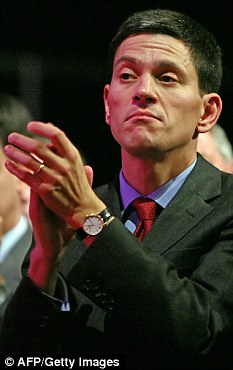
David Miliband
Rebrand edict: David Miliband
The Foreign and Commonwealth Office has spent tens of thousands of pounds of taxpayers’ money on a new logo – which is almost identical to the previous design.
Foreign Secretary David Miliband ordered the £80,000 makeover at the same time as the department was being forced to draw up a hit list of embassies and consulates around the globe it will close to save money.
In addition to the new branding costs, the FCO will be forced to spend more money on new stationery carrying the updated look.
Last year the Foreign Office was £110million over budget – mainly caused by its massive spending on upgrading its security and on counter-terrorism work.
Yet at the same time senior mandarins called in image consultants to rebrand the department which has been in existence since 1782.
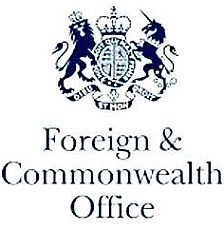
A glossy brochure which accompanies the rebrand claims that the new identity – featuring the Royal Crest and a new typeface for the words ‘Foreign & Commonwealth Office’ – will ‘subtly represent the ‘‘Power to influence”’.
The new FCO brand came into effect last month with all embassies and other posts around the world issued with a ‘brand tool kit’ including a lists of do’s and don’ts on how to use the new logo.
An 80-page pamphlet states: ‘Our logo consists of the Royal Crest and name beneath it...we need to use this...in all our print materials.’
commonwealth-old.jpg
commonwealth-new.jpg
Spot the difference: The Foreign and Commonwealth Office has spent tens of thousands of pounds of taxpayers' money on a new logo- which is almost identical to the previous design
The image consultants also designed a simplified version of the crest for use on the FCO website – removing the Royal motto ‘Dieu et mon droit’ – ‘God and my right’ – and the motto of the Order of the Garter ‘Honi soit qui mal y
pense’ – loosely translated as ‘Evil be to him who evil thinks’.
The highly-paid consultants also chose a new typeface to be used on all the FCO’s paperwork. The font, called Frutiger, is also used by the National Health Service.
According to the FCO, its new brand represents six words: ‘Empowering, Insightful, Principled, Persuasive, Strategic and Intelligent’.
Officials drawing up invitations and staging events at embassies around the world have been warned not to ‘cramp’ the logo on letters and other material.
And the list of ‘don’ts’ includes: ‘Do not render the logo in any other colour than the FCO blue, reversed out white or black’ and ‘Be careful never to expand or condense the master artwork’.
A spokesman for the FCO said: ‘This will actually save money over time – for example, getting rid of the need for individual embassies to hire design teams when they produce publications or exhibition materials.’
He said the department had ‘engaged’ a ‘design consultant’ at a cost of £80,000. He did not disclose the additional cost of the new stationery needed across the department’s global operations. 

Superspy in the sky could soon be patrolling over British cities to search for hidden terror cells

By Jason Lewis
Last updated at 1:13 AM on 26th April 2010
A Top-secret US unmanned drone used to locate Al Qaeda and Taliban hideouts in Pakistan and Afghanistan could soon be patrolling over British cities to search for hidden terror cells.
The controversial move would allow MI5 and GCHQ, the Government's eavesdropping centre, to step up surveillance operations over the UK. Until now, the £23million Global Hawk aircraft has not been available for foreign sale.
However, US policy has been quietly changed and Britain is now negotiating to buy the drones. America is keen to supply them for British patrols after a string of terror plots threatening the US and its citizens.
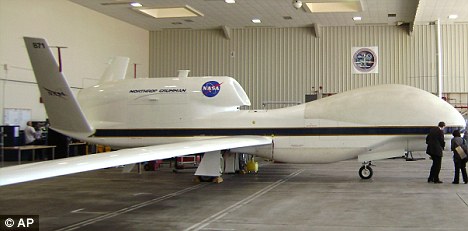
A NASA Global Haw
Terror Watch: The £23 million Global Hawk unmanned drone
These include the attempt in 2006 to detonate liquid bombs on aircraft flying to American cities from the UK. It is not known how many drones the UK wants from manufacturer Northrop Grumman, but earlier this year a senior Ministry of Defence procurement official visited the Pentagon to begin negotiations.
Britain would not need to use the drones in Afghanistan and Pakistan because the US already provides full air coverage in the region. Instead, it is believed they will be used mainly for domestic surveillance.
The drones are also being deployed by the US Navy in the Caribbean and off the Florida coast to combat drug smuggling. In Britain, MI5 and GCHQ already use three planes based at RAF Northolt in North-West London to spy on citizens.
The three Britten-Norman Islander aircraft are all fitted with sophisticated surveillance equipment. They have been used to track down terror cells and to locate former Afghan veterans who may have returned to Britain to plot terror attacks.
The aircraft are able to identify suspects using 'voice-prints' of insurgents with British accents that were picked up by spy planes monitoring Taliban radio signals in Afghanistan.
One stumbling block is that permission from the Civil Aviation Authority would be needed to fly the drones in already congested UK airspace. Although the CAA gave the MoD permission to fly another drone over parts of Wales earlier this month, it is understood to be against regular flights because of safety fears.
However, the Global Hawk recently became the first drone to be certified by the American Federal Aviation Authority for use in civilian air corridors with no advance notice.
The drone can stay airborne for 30 hours without refuelling. Last night, MoD sources said the Global Hawk was being looked at for possible military use but any decision to buy the drone would depend on funding.